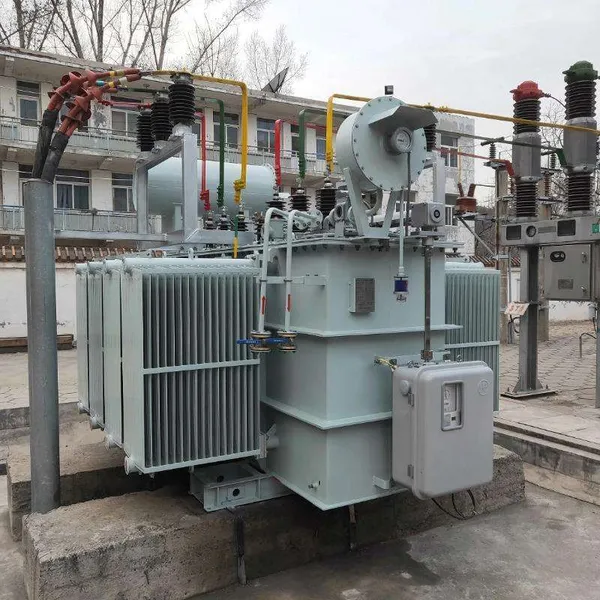

 Business License

Atmospheric correction of insulation withstand voltage test values for North American switchgear
The insulation test of the North American medium voltage air insulated armored switchgear standard IEEE C37.20.2 follows the IEEE STD4-2013 standard, which has clear provisions for test voltage, atmospheric correction, etc., slightly different from the IEC standard. The standard specifies that the dielectric rating is applicable under standard conditions (temperature=20 ℃, pressure=101.3 kPa [14.7 psi], absolute humidity 11 g/m3). Of course, if it occurs during testing, it is under standard conditions. Therefore, the insulation withstand voltage test must correct the voltage required during the test period to match the actual test conditions and make it the same as the performance under standard conditions.
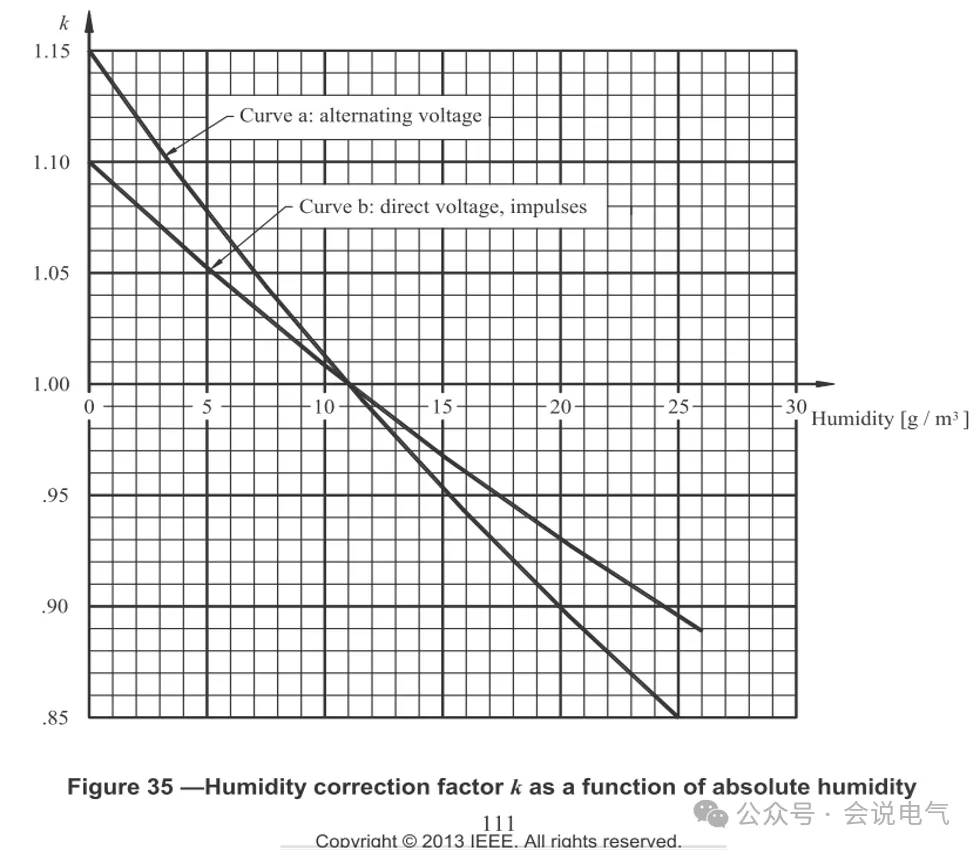
The standard requirements aim to generate reproducible testing conditions and parameters that are unlikely to be affected by specific testing laboratory choices. The consistency of the experiment will not vary due to differences in the laboratory, location, and time of the experiment. During dielectric testing, equipment, conductors, and insulation components must be clean and non-contact.
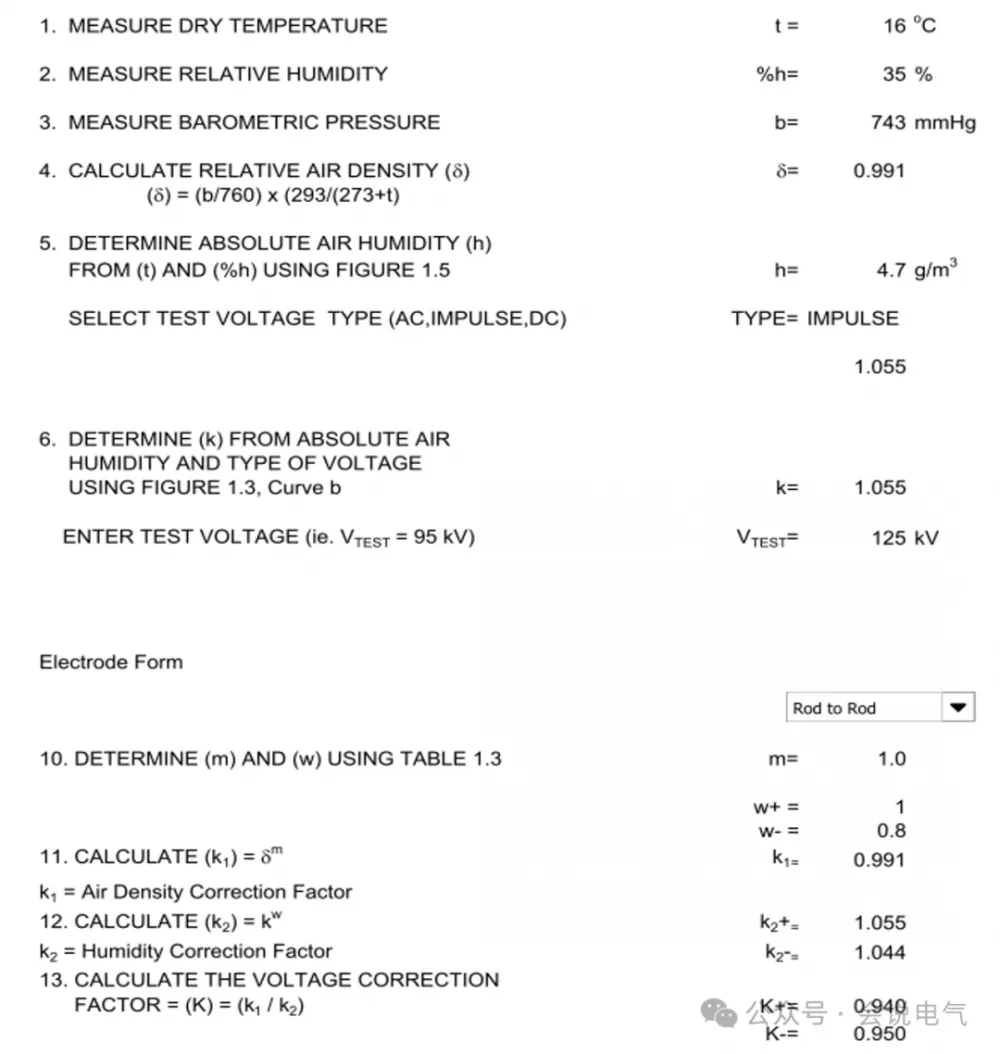
The result is that the test showed performance under "ideal" (and reproducible) conditions, and the performance at the installation site will not match the values obtained during design testing. Various standards and application guidelines recognize this and stipulate the use of "protective margins" in insulation coordination research. This attempts to coordinate the rated dielectric value with the actual capacity of the equipment in actual installation, where insulation may degrade due to age, unfavorable atmospheric conditions, unclean equipment and insulation surfaces, and other factors. However, our domestic laboratories often do not make corrections and conduct tests based on a coefficient of 1, which is called raising standards. As a testing station or certification agency, they do not conduct atmospheric correction tests. Testing agencies comply with standards, rather than setting their own standards. This is unscientific and violates standards. Members of the International Short Circuit Alliance STL strictly adhere to the standards, and the insulation withstand voltage values in their test reports are corrected by atmospheric conditions. Unlike the atmospheric correction of IEC standards, North American standards have different correction factors for positive and negative polarity test values of power frequency withstand voltage and lightning impulse withstand voltage, and must be calculated according to IEEE STD4-2001 standard.
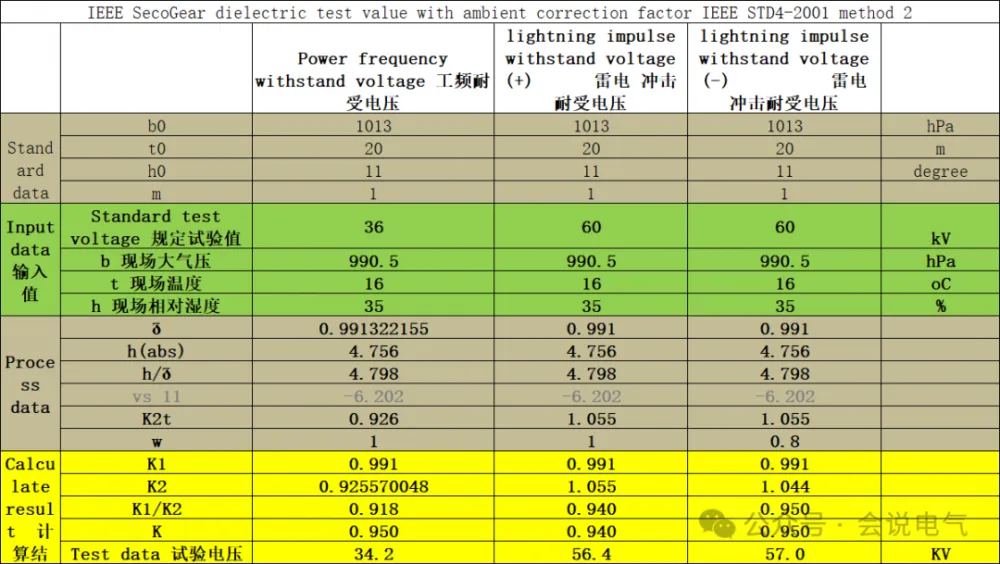
The following is an explanation of AI's calculation values for the IEEE Std4-2013 standard atmospheric coefficient. According to the IEEE Std4-2013 standard, the Atmospheric Correction Factor is used to correct the effect of differences in atmospheric conditions (temperature, pressure, humidity) from standard atmospheric conditions on insulation strength during high-voltage testing. The calculation formula for this coefficient is: k=d × fk=d \ timesfk=d × f. The range of values for the correction coefficient is: the maximum value of the atmospheric correction coefficient is 1, corresponding to standard atmospheric conditions (without correction). When the actual environment is worse than the standard conditions (such as a decrease in high-altitude air pressure, an increase in temperature, or a decrease in humidity), the correction factor will be less than 1, thereby reducing the test voltage to avoid over assessment of the equipment. When the actual environment is better than the standard conditions, the correction factor is still calculated as 1 and will not be greater than 1. If the calculated correction factor is greater than 1, possible reasons and solutions: Calculation error: Check whether the formula application and parameter input are correct, such as whether the units of temperature, air pressure, and humidity are consistent, and whether standard atmospheric condition parameters have been misused. Data anomaly: Actual measured atmospheric parameters may have errors or outliers, requiring re measurement or verification of the data. Scope of application: The IEEE Std4-2013 standard is mainly aimed at atmospheric correction for high-voltage testing. If it involves other fields (such as power correction, remote sensing atmospheric correction, etc.), reference should be made to the corresponding standards and methods in the field. Summary: The atmospheric correction factor of IEEE Std4-2013 will not exceed 1. If the calculation result is abnormal, priority should be given to checking the calculation process and data accuracy to ensure compliance with standard requirements. Currently, more and more foreign customers are choosing domestic testing stations for testing. Therefore, domestic testing stations must strictly adhere to standards and cannot follow domestic practices, which will affect foreign customers' doubts about the capabilities of domestic testing stations. Engineers from various certification agencies also need to study the standards more, follow the standards, and not be stubborn, do not make progress, and do not learn.
~END
Recently Posted
-
Application of Medium Voltage Switchgear for Low Voltage Transformers
September 21, 20261. What is a low-voltage through core current transformer?The function of a current transformer (CT) is to convert high current in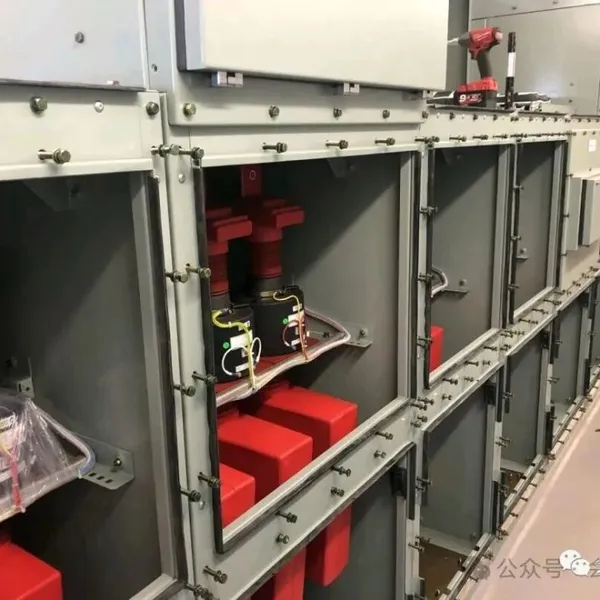 Read More
 -
High voltage current limiter
September 21, 2026High voltage current limiter is a special type of current limiting fuse that meets the high current application requirements diffe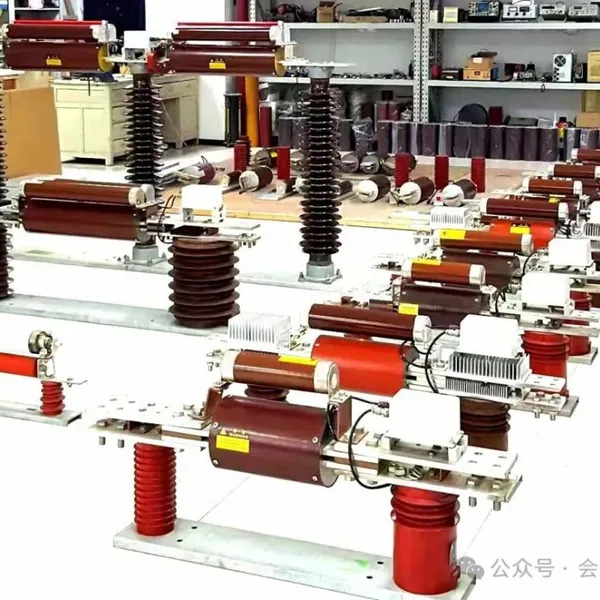 Read More
 -
Medium voltage MCC motor control cabinet
September 17, 2026Regarding the arcing of medium voltage FC switchgear, F-C refers to the combination of contactor and fuse. FC is mainly used for motor protection, and the contactor has a long electrical life of at least 300000 times, suitable for frequent operation. Fuses are used for overload protection. FC is widely used in steel mills, chemical plants, coal-fired power plants, ships, and offshore oil platforms. In these situations, the shRead More -
Guidelines for Calculation and Design of Low Voltage Switchgear
September 16, 2026IEC 61439 replaces IEC60439 and introduces the principle of verifying switchgear. These replace the existing Type Test Assembly (T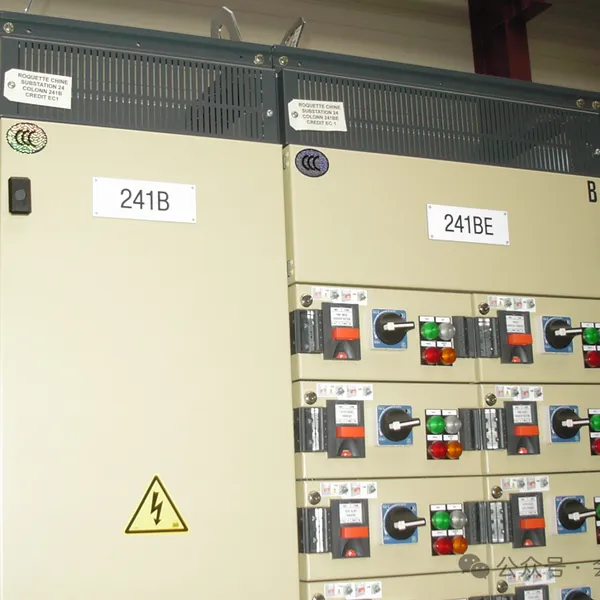 Read More

Contact Us
Recommended Products
-
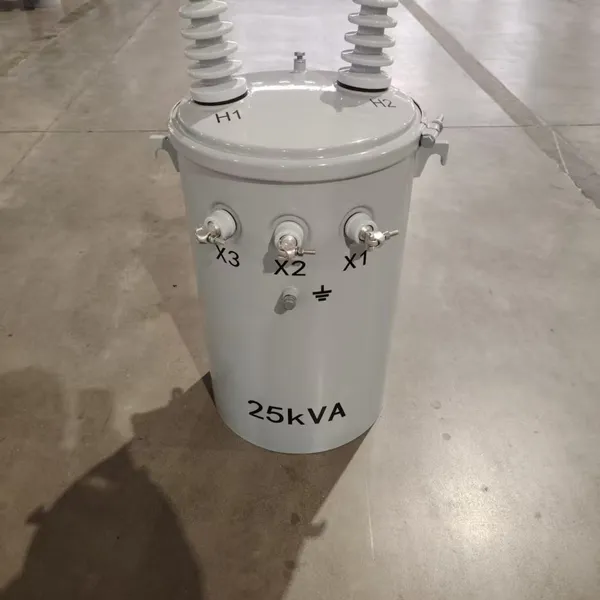
 Single Phase Oil Immersed Transformer 10KVA 15KVA 25KVA 37.5KVA Standard CompliantNegotiableMOQ: 2 Units
 -
Electrical Arc Furnace Transformers up to 120MVA - Certified for Steel Industry ApplicationsUS$ 8000 - 10000MOQ: 1 Unit
-
3-Phase Oil Type Transformer 5-Year Warranty With Load Test ReportUS$ 5428 - 5628MOQ: 1 Unit
-
Three Phase Oil Filled Transformer for Mining Operations Dust-Proof DesignUS$ 5428 - 5628MOQ: 1 Unit
-
HV Three Phase Oil Filled Transformer With ONAN Cooling 500kVA-2500kVAUS$ 5428 - 5628MOQ: 1 Unit
-
11/24/33KV High Voltage Isolation Switch With Mill Test ReportUS$ 800MOQ: 1 Unit
-
3-Pole Outdoor Isolation Switch With 5-Year Warranty and Compliance TestingUS$ 800MOQ: 1 Unit
-
YH5WZ 3KV-110KV Zinc Oxide Arrester for Power Station Outdoor High Voltage DistributionUS$ 21MOQ: 100 Units
-
Outdoor SF6 Load Break Switch LW30-72.5/1250A 24KV 630A 16KA Three PhaseUS$ 10000MOQ: 1 Unit
-
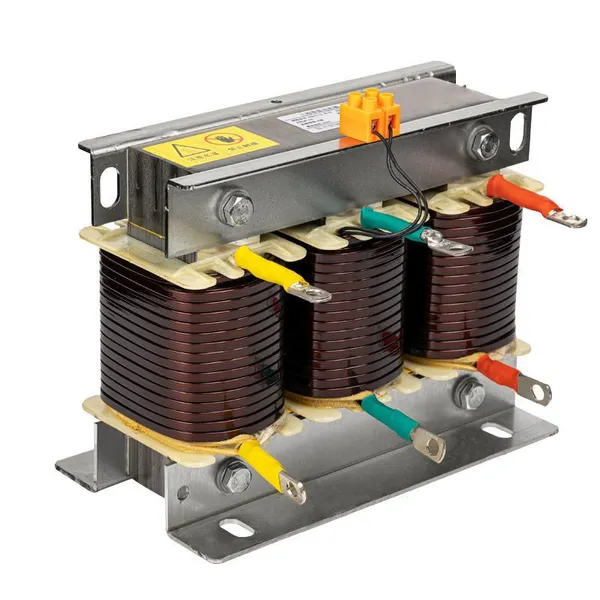
Input Line Reactor for CNC Machine Frequency Converters, 400V 60HzUS$ 65MOQ: 5 Units
-
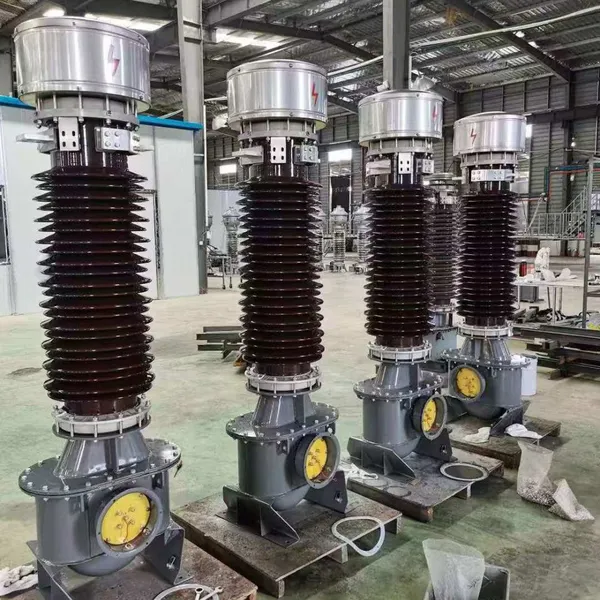
Industrial Grade 35-220KV Oil-Immersed Current Transformer for SubstationsUS$ 480 - 500MOQ: 3 Units
-
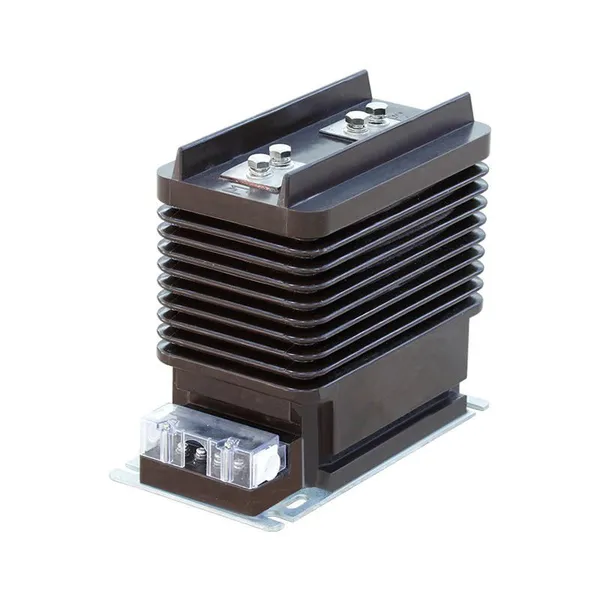
LZZBJ9-20 Indoor 24kV High Voltage Cabinet Single-Phase 5-20 for Industrial Power SystemsUS$ 250MOQ: 3 Units
-
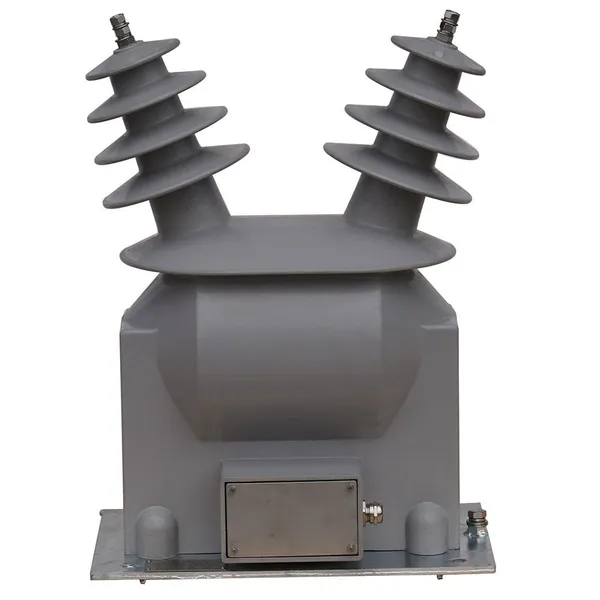
17.5 KV Full-enclosed Outdoor Epoxy Resin Casting and Double Pole Insulated Voltage TransformerUS$ 90 - 100MOQ: 1 Piece
-
Three Phase 30kVA SVC Voltage Regulator for Textile Manufacturing, Stable OutputUS$ 159MOQ: 10 Units
-
Amorphous Core 25kVA Transformer Compliant With IEC Standards for Power DistributionUS$ 1300 - 2900MOQ: 2 Units
-
CHINT NM8NDC-630 DC 1000V/Ui High-Voltage Circuit Breaker With 630A Frame CurrentUS$ 425 - 625MOQ: 100 Units
-
High Voltage Drop Out Fuse Cutout 33KV 27KV 24KV for Overhead LinesUS$ 35MOQ: 100 Units
-
TVR-10 KVA Automatic Voltage Stabilizer 220V ±0.5% Accuracy for Laboratory InstrumentsUS$ 103 - 123MOQ: 1 Unit
-
Universal 5000VA Voltage Transformer for International Appliances 110V-220VUS$ 102 - 107MOQ: 10 Units
-
500kV Three-Phase Oil-Immersed Auto Transformer 250MVA for Power GridsUS$ 800 - 9000MOQ: 1 Unit