
 Business License

Comparison of Applicability between UL1558 Switchgear and UL891 Distribution Panel
The UL1558 SWITCHGEAR switchgear is larger and more expensive than the UL891 SWITCHBOARD distribution panel, but more reliable, which seems intuitive. In order to transition from intuition to the real world, a comparative analysis of applicability is needed.
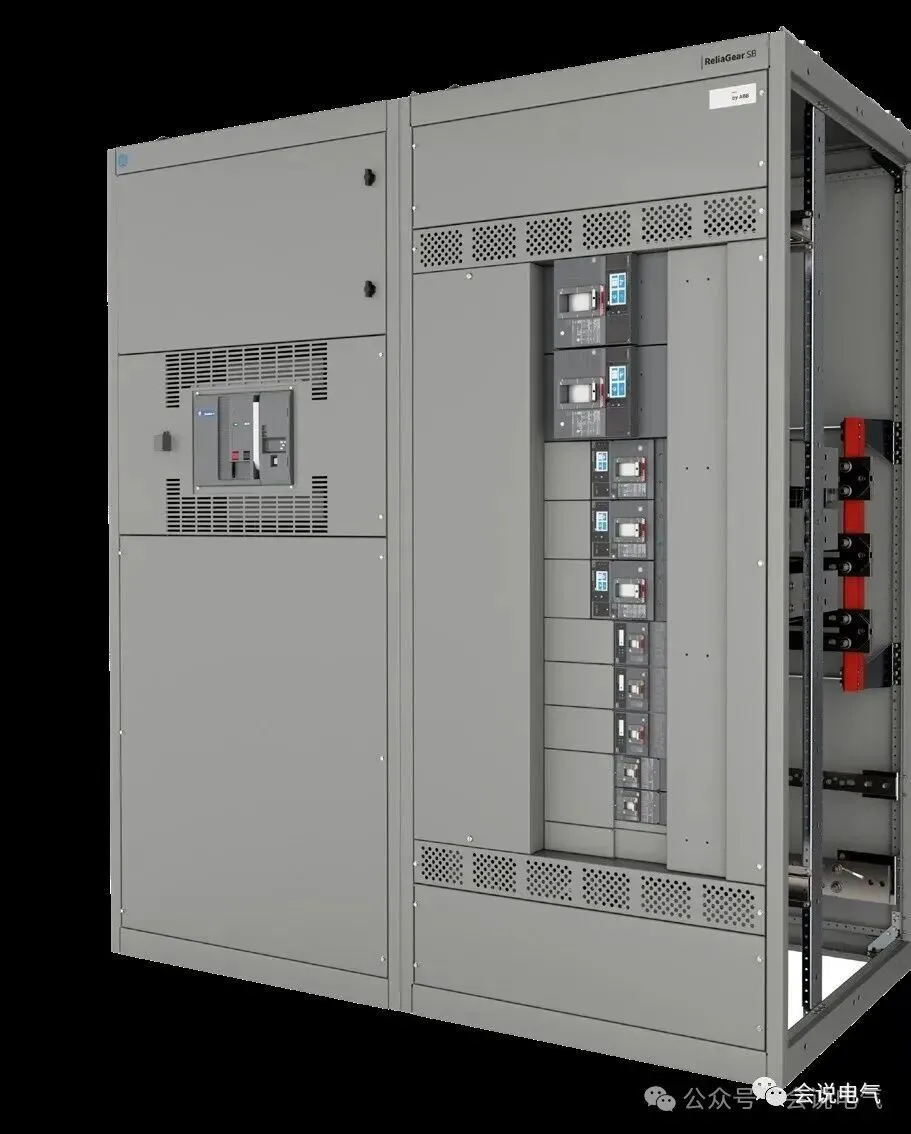
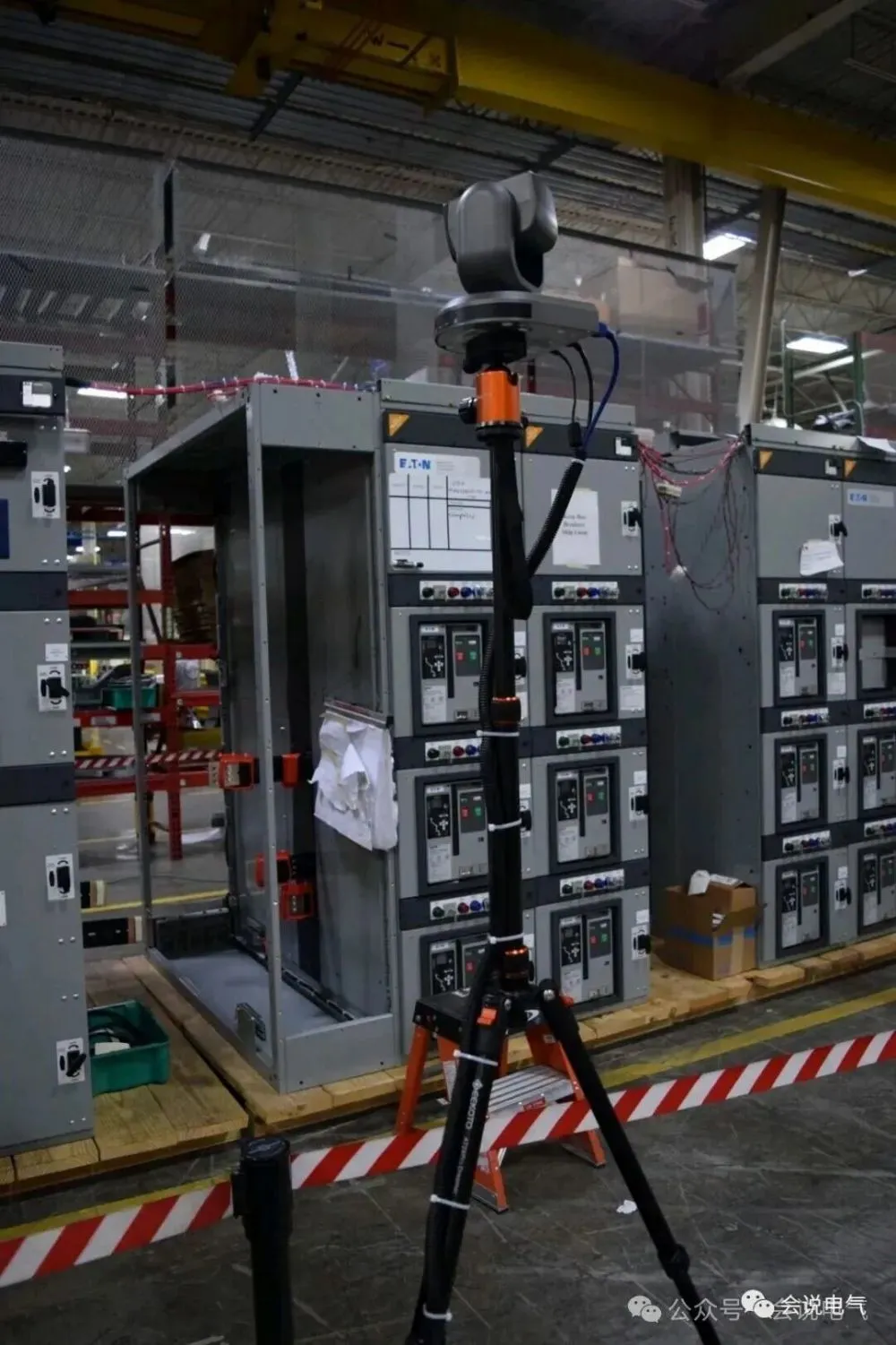
In order to maintain a common reference field between the two types of equipment, we chose a feeder with an 800A circuit breaker and the same main busbar (ACB installed in the switchgear); The plastic shell group was installed on the distribution panel, and the main busbar capacities ranging from 2000 to 4000 amperes were studied for 480V and 208V systems.
The cost of switchgear is 50% to 100% higher than its corresponding cost in a group installed distribution panel. This naturally avoids the issue of the return on investment from the increased cost of switchgear.
According to the extensive fault data evaluation of IEEE-493-1990, Table 10 in Chapter 3 of this standard summarizes the statistical failure rates of various power system equipment per unit year. Although switchgear cannot be directly compared to distribution panels, fixed low-voltage circuit breakers (600V and below, including molded case) used in group installation applications such as distribution panels can be compared to low-voltage metal shell withdrawable circuit breakers used in switchgear.
1、 The failure rate of the distribution panel is about 156% of that of the switchgear, and the average downtime per occurrence is 4 hours. Although the foundation of the data is historical, it effectively reflects the production and design concepts of each product.
The plastic shell protection device aims to meet market demand as economically as possible, and the metal shell switchgear is developed for applications that require reliability and service continuity. When the above statistical data is combined with the expected outage costs of each event in various industries (commercial=2299 USD; industrial=61710 USD; government=53455 USD), it is clear why applications that focus on reliability and safety are designed around switchgear. Eliminating one fault event within the service life of the switchgear provides more return than increasing the initial investment.
However, IEEE-493 also indicates that the frequency of faults occurring is much higher than this, depending on the environment, maintenance, and duration of use. The additional features built into the device, such as the short-time withstand rating on the busbar, the high short-time rating of the circuit breaker, the pull-out structure, and full maintainability, simply become additional benefits for the owner. They promote coordination between upstream and downstream, extend the service life of circuit breakers and provide services without the need for bus power outages, as well as increase the expected lifespan of switchgear.
2、 The traditional view is that distribution boards are always much smaller than switchgear. These results indicate that this is not the case. Due to the selection of the main protective device, it plays an important role in the footprint of the switchgear and whether rear connections are required. Based on experience, any switchgear depth greater than 1.1 meters typically requires compliance with NEC 110.26 for rear maintenance and rear work clearances. If an insulated shell main circuit breaker is specified, the main part size of 4000A can be reduced from 1.3 meters to 1.1 meters. However, it is worth noting that in most cases, the arrangement of assembled distribution panels is still wider, and this is particularly evident in some cases (extended by 62%).
The lesson to be learned is the importance of selecting the frame size correctly to optimize the footprint. For example, a circuit breaker rated at 800A uses the same frame size as a 1200A circuit breaker. Therefore, both require the same height space and must be separately installed in a 1-meter-wide casing. However, the 600A circuit breaker can reduce the height space by 33% and can be installed in double width enclosures of the same size, which means that a 1-meter wide switchgear can accommodate 4 1200A frame circuit breakers or 12 600A circuit breakers.
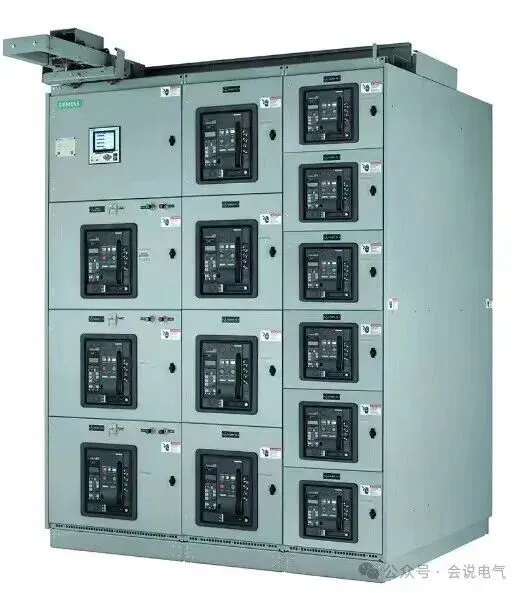
Therefore, in restricted distribution panel locations, applying more 600A circuit breakers instead of 800A or fewer 1200A feeders instead of 800A to downstream sub distribution panels has significant advantages.
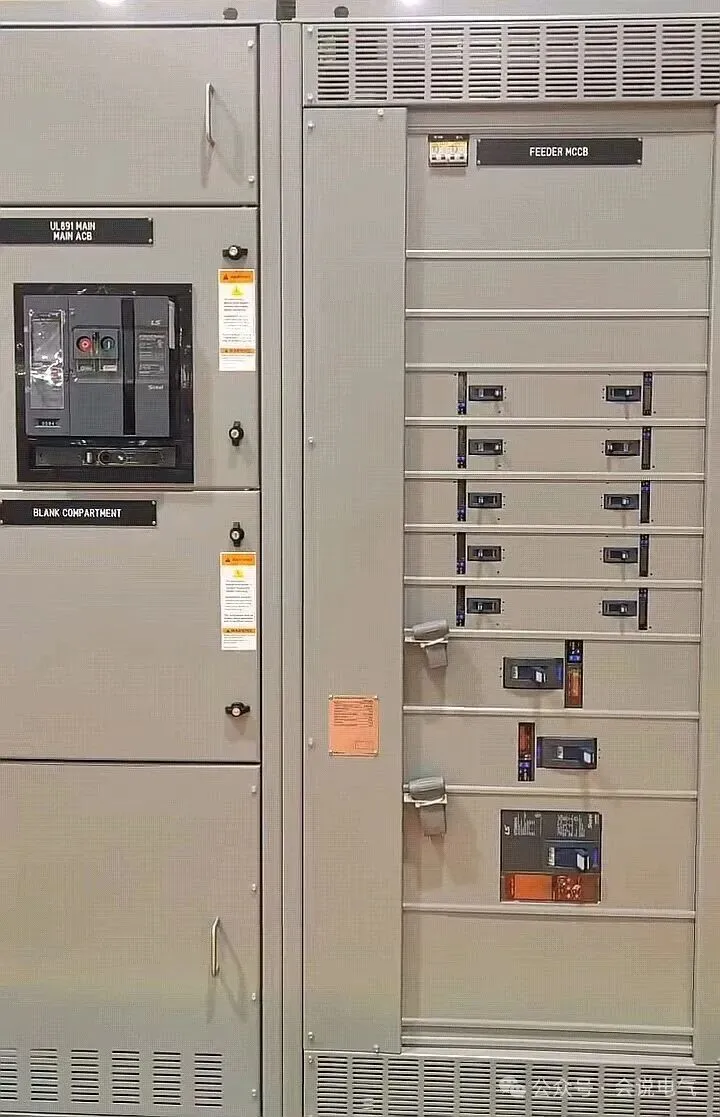
3、 The distribution panel undoubtedly represents the most widely used low-voltage distribution equipment, but there seems to be serious confusion about its many functions and when to use them most effectively.
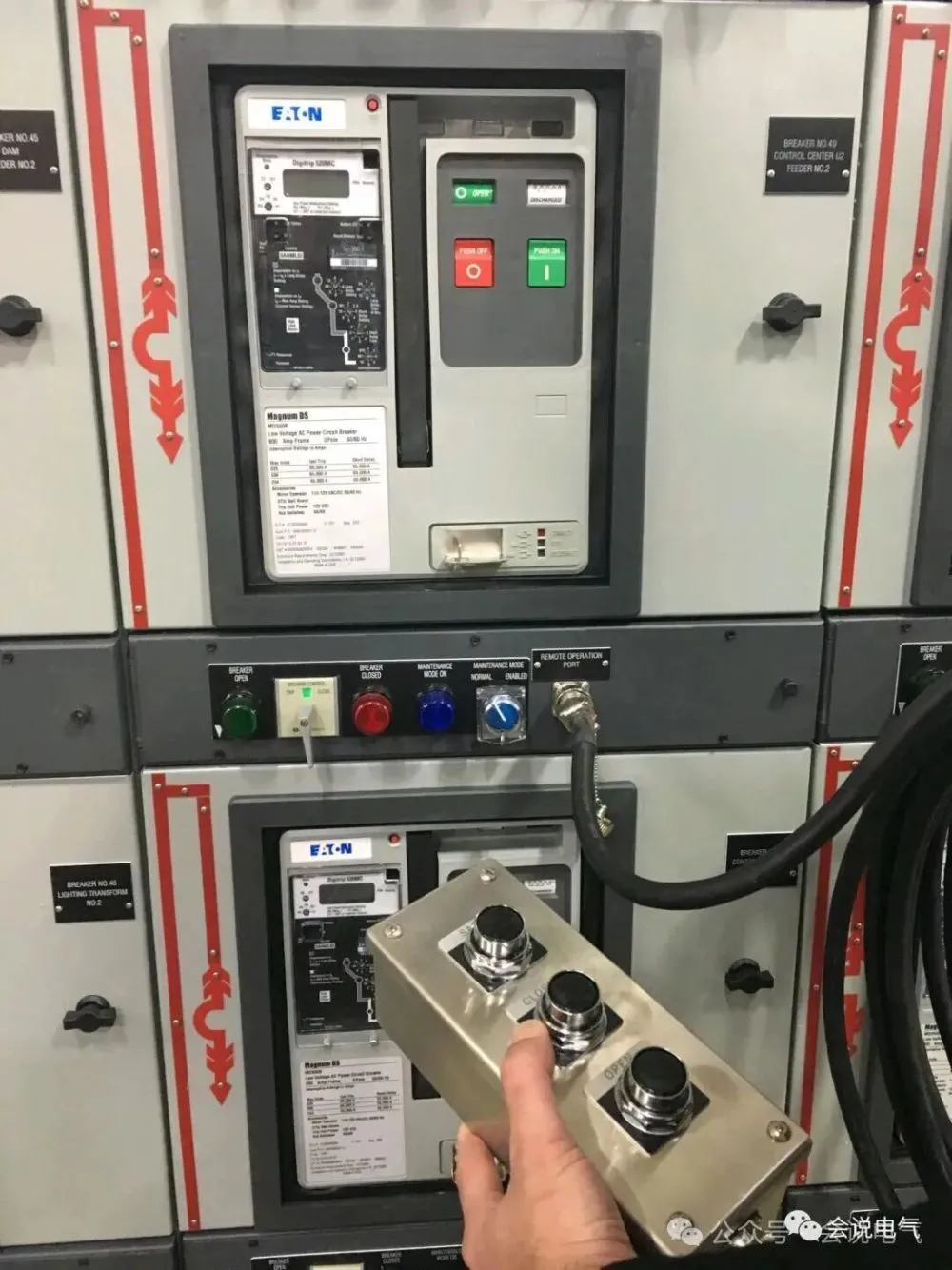
The flexibility of the distribution panel has been improved to the level where bolt fixed or plug-in structures can now be used. In bolt fixed design, the protective device is firmly fixed to the main distribution busbar with bolts. The plug-in structure includes a detachable module, on which the protective device is installed and allows it to be clamped onto the main distribution busbar. This connection is achieved through a spring reinforced high tension clamp, designed to clamp the busbar more tightly under high fault conditions.
The main advantage of the plug-in structure is that the protective device can be quickly removed from the circuit board without the need to release the circuit breaker (or switch) from the busbar. Although bus interruption is required for safety purposes, this feature can minimize interruption time to the greatest extent possible. This feature only increases costs by about 2% and has no impact on the overall footprint of the distribution panel.
Recently Posted
-
Gas Calculation for Inflatable Cabinets
November 16, 2026As is well known, SF6 is a greenhouse gas, and emitting 1 ton of SF6 is equivalent to emitting 23500 tons of CO2. Therefore, the d Read More
-
Plum blossom contact temperature rise solution
November 13, 2026The most difficult point to solve the temperature rise of the central circuit breaker switchgear is the connection point of the pr Read More
-
Differences in central cabinets
November 13, 2026Differences in central cabinetsMany mid mounted cabinets look similar in appearance, and some have well crafted details that give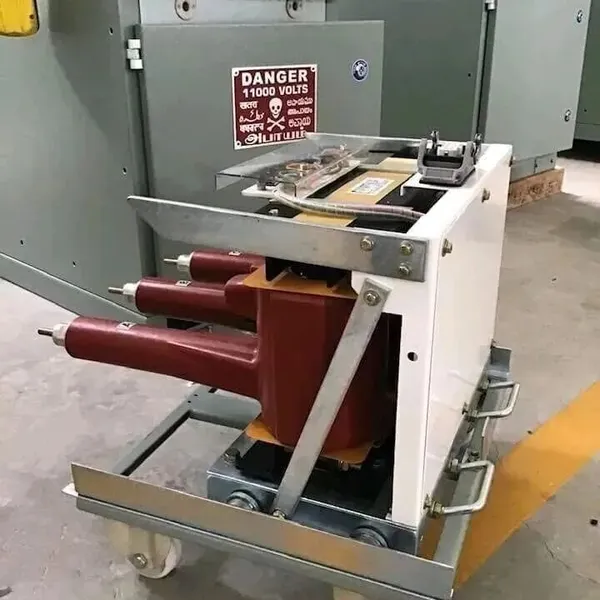 Read More
-
Requirements and Solutions for Switchgear in Foreign Projects
November 11, 2026Introduction With the going global of domestic products and the construction of the the Belt and Road, more and more Chinese switc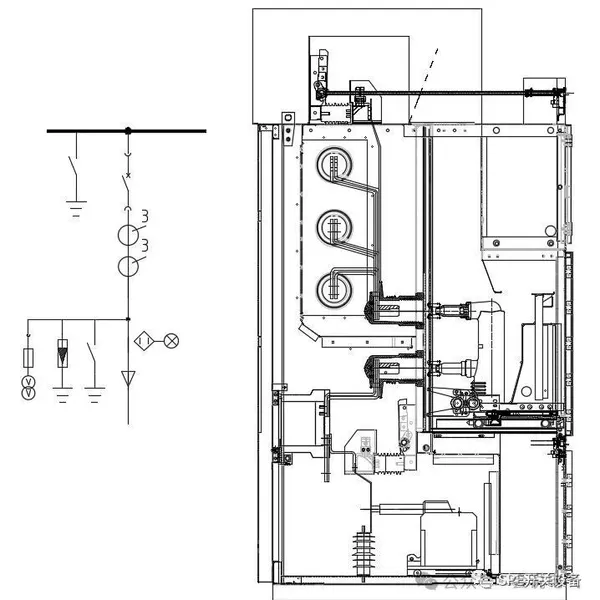 Read More

Contact Us
Recommended Products
-
 Single Phase Oil Immersed Transformer 10KVA 15KVA 25KVA 37.5KVA Standard CompliantNegotiableMOQ: 2 Units
-
Electrical Arc Furnace Transformers up to 120MVA - Certified for Steel Industry ApplicationsUS$ 8000 - 10000MOQ: 1 Unit
-
3-Phase Oil Type Transformer 5-Year Warranty With Load Test ReportUS$ 5428 - 5628MOQ: 1 Unit
-
Three Phase Oil Filled Transformer for Mining Operations Dust-Proof DesignUS$ 5428 - 5628MOQ: 1 Unit
-
HV Three Phase Oil Filled Transformer With ONAN Cooling 500kVA-2500kVAUS$ 5428 - 5628MOQ: 1 Unit
-
11/24/33KV High Voltage Isolation Switch With Mill Test ReportUS$ 800MOQ: 1 Unit
-
3-Pole Outdoor Isolation Switch With 5-Year Warranty and Compliance TestingUS$ 800MOQ: 1 Unit
-
YH5WZ 3KV-110KV Zinc Oxide Arrester for Power Station Outdoor High Voltage DistributionUS$ 21MOQ: 100 Units
-
Outdoor SF6 Load Break Switch LW30-72.5/1250A 24KV 630A 16KA Three PhaseUS$ 10000MOQ: 1 Unit
-
Industrial Grade 35-220KV Oil-Immersed Current Transformer for SubstationsUS$ 480 - 500MOQ: 3 Units
-
LZZBJ9-20 Indoor 24kV High Voltage Cabinet Single-Phase 5-20 for Industrial Power SystemsUS$ 250MOQ: 3 Units
-
Three Phase 30kVA SVC Voltage Regulator for Textile Manufacturing, Stable OutputUS$ 159MOQ: 10 Units
-
Amorphous Core 25kVA Transformer Compliant With IEC Standards for Power DistributionUS$ 1300 - 2900MOQ: 2 Units
-
High Voltage Drop Out Fuse Cutout 33KV 27KV 24KV for Overhead LinesUS$ 35MOQ: 100 Units
-
500kV Three-Phase Oil-Immersed Auto Transformer 250MVA for Power GridsUS$ 800 - 9000MOQ: 1 Unit
-
U70BS 210 Glass Insulators 70kN Mechanical Load 210mm Creepage Distance Warranty Included Standard CompliantUS$ 6MOQ: 1000 Units
-
Custom 690V Ceramic Fuses RGS88M 150A 160A 185A 200A 220A With WarrantyUS$ 1 - 3MOQ: 100 Units
-
Schneider SM6 SF6 Gas-Insulated Switchgear Cabinet 630A 12KV/24KV DM1-A IMC IMP Factory Tested and WarrantedUS$ 3500MOQ: 1 Unit
-
Intelligent Dehumidification Device for High-voltage Electrical Cabinet With Digital Display and Humidity Sensor 220VUS$ 13 - 30MOQ: 10 Pieces
-
3 Phase SF6 Load Break Switch for Indoor High Voltage Switching in Industrial Plant Power RoomsUS$ 450MOQ: 10 Units